In industrial filtration processes, achieving optimal filter cake dryness is a critical factor that influences product quality, energy consumption and overall operational efficiency. Improving filter cake dryness can lead to significant cost savings and environmental benefits.
This blog explores the science behind filter cake formation, the variables that affect its moisture content and practical strategies to enhance dryness across various filtration systems.
Understanding Filter Cake Formation
A filter cake is the layer of solids that accumulates on a filter media during solid-liquid separation. As the slurry passes through the filter, solids are retained while the liquid (filtrate) flows through. Over time, these solids build up into a cake.
The moisture content of the filter cake can vary widely depending on:
- Particle size and shape
- Slurry concentration
- Filtration pressure
- Filter media type
- Cake thickness
- Post-filtration treatment
The goal is to minimize the retained liquid in the cake without compromising throughput or filter integrity.
Key Factors Affecting Filter Cake Dryness
Particle Characteristics
One of the most influential aspects of filter cake dryness is the nature of the particles being filtered. Fine particles tend to retain more moisture due to their high surface area and the capillary forces between them. Additionally, irregular shaped particles can create voids within the cake structure that trap liquid. To counteract this, flocculation is often used to agglomerate fine particles into larger, more permeable clusters, which improves drainage and reduces residual moisture.
Slurry Conditioning
Slurry conditioning plays a vital role in optimizing dryness. Pre-treatment with coagulants or flocculants can significantly enhance cake permeability by altering particle interactions. Adjusting the pH of the slurry may also improve the effectiveness of these additives, helping to reduce moisture retention and improve overall filtration performance.
Filtration Pressure and Time
Filtration pressure and time are also important variables. Applying higher pressure can drive more liquid out of the cake, but excessive pressure may compress the cake too tightly, reducing its permeability and making it harder for liquid to escape. Finding the right balance in filtration cycle timing is essential to ensure maximum dryness without compromising throughput or damaging the filter media.
Filter Media Selection
The choice of filter media has a direct impact on cake moisture content. Media with the appropriate pore size and surface chemistry can improve separation efficiency and reduce liquid retention. Hydrophobic filter materials, for example, tend to repel water and may help achieve drier cakes compared to hydrophilic ones, which attract and hold onto moisture.
Cake Thickness
Finally, cake thickness must be carefully managed. Thicker cakes generally retain more moisture unless properly controlled. Maintaining optimal discharge intervals and incorporating cake washing techniques can help regulate thickness and improve dryness. In systems where cake buildup is continuous, automated monitoring and control systems can be especially useful in maintaining consistent performance.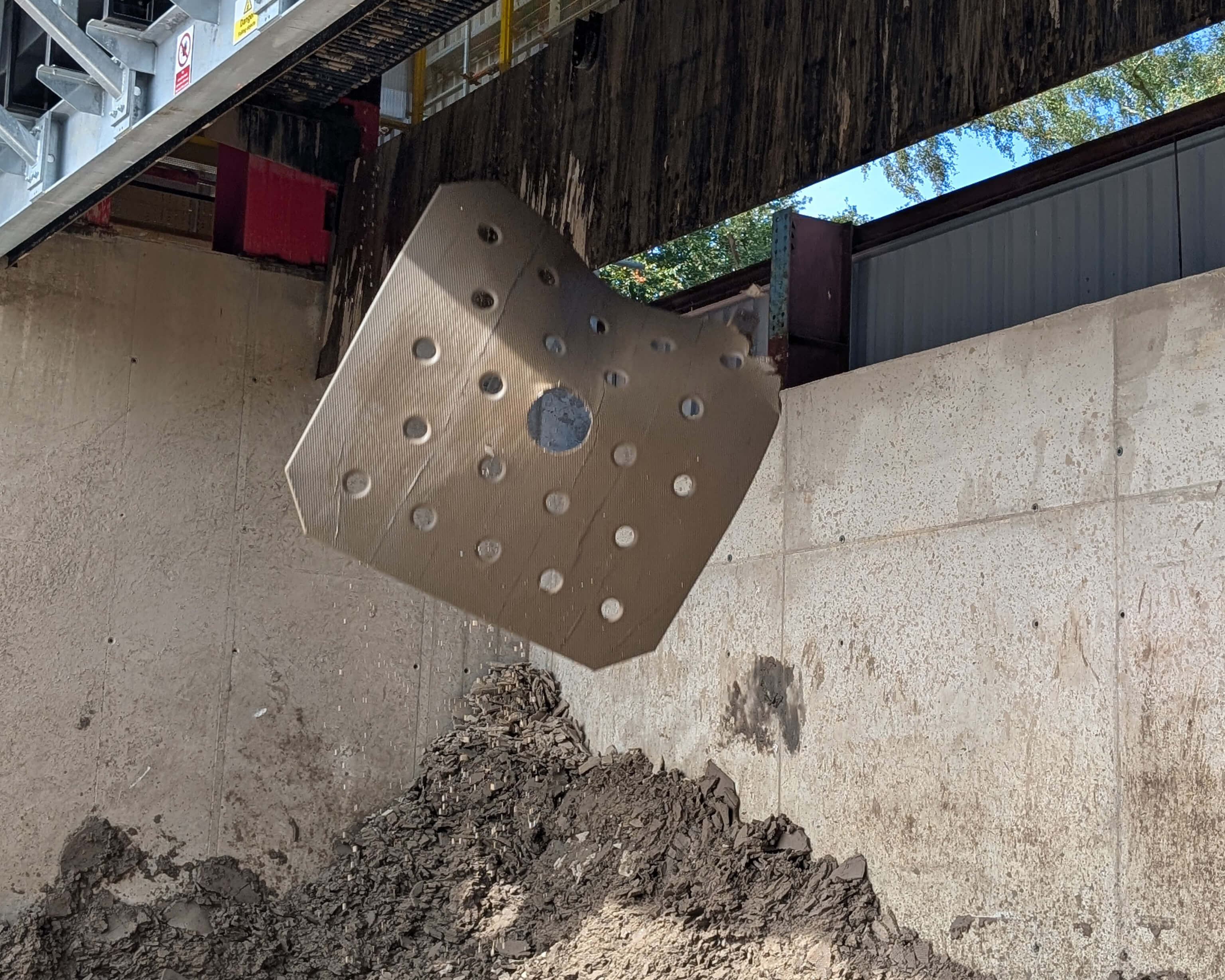
Techniques to Improve Filter Cake Dryness
Improving filter cake dryness requires a combination of mechanical, chemical and operational strategies. Each technique targets different aspects of the filtration process, from slurry preparation to post-filtration treatment. Below are the most effective methods, expanded with practical applications and considerations.
- Use of Filter Aids
Filter aids are finely divided materials, such as diatomaceous earth, perlite, cellulose or synthetic polymers, added to the slurry or pre-coated on the filter medium. Their primary function is to enhance cake permeability by creating a more porous structure that allows liquid to drain more freely.
- Benefits: Improved flow rates, reduced blinding of the filter media and lower residual moisture.
- Considerations: Filter aids must be compatible with the product and process, and their disposal or recovery should be factored into operational costs.
- Cake Washing
Cake washing involves rinsing the filter cake with clean water or a suitable solvent after the initial filtration step. This technique helps displace the retained mother liquor and reduces the moisture content, especially when the liquid phase contains dissolved impurities or solvents that need to be removed.
- Benefits: Enhanced purity and lower residual moisture; useful for downstream drying or product recovery.
- Considerations: Requires additional water or solvent usage and may extend the filtration cycle time.
- Air Blow or Vacuum Drying
After filtration, applying compressed air or vacuum across the cake surface can significantly reduce moisture content. This technique is commonly used in pressure filters, vacuum belt filters and filter presses.
- Benefits: Efficient moisture removal without thermal input; relatively low energy consumption.
- Considerations: Effectiveness depends on cake permeability and equipment design; may require precise control to avoid cake cracking or channeling.
- Thermal Drying
Thermal drying is used when extremely low moisture levels are required, or when other drying methods are insufficient. Techniques include hot air convection, infrared drying, microwave drying and contact drying (e.g. heated plates or rollers).
- Benefits: Achieves very low moisture content; suitable for final product preparation.
- Considerations: High energy consumption and potential impact on product integrity; requires careful temperature control to avoid degradation.
- Mechanical Compression
Mechanical compression involves physically squeezing the filter cake to expel trapped liquid. This can be done using hydraulic filter presses, roller presses or screw presses, depending on the material and process.
One advanced method within this category is membrane squeeze technology, which uses flexible membranes inside filter plates to apply additional pressure to the cake after the initial filtration cycle. These membranes are typically inflated with air or water, compressing the cake uniformly and enhancing moisture removal.
- Benefits: Effective for fibrous or compressible cakes; reduces moisture without heat. Membrane squeeze offers improved dryness and shorter cycle times compared to conventional plate-and-frame presses.
- Considerations: May not be suitable for brittle or fragile cakes; equipment must be designed to handle the specific material characteristics. Membrane squeeze also requires careful maintenance and monitoring to prevent damage and ensure consistent performance.
- Slurry Pre-Treatment and Conditioning
Improving filter cake dryness often starts before filtration even begins. Conditioning the slurry with flocculants, coagulants or pH adjustments can alter particle behavior and enhance cake formation.
- Benefits: Larger, more uniform particles lead to better drainage and lower moisture retention.
- Considerations: Requires careful dosing and monitoring; improper conditioning can lead to poor cake structure or increased filtrate contamination.
- Optimizing Filtration Parameters
Fine-tuning operational parameters such as pressure, flow rate and cycle time can have a significant impact on cake dryness. For example, gradually increasing pressure during filtration can prevent premature cake compression and improve liquid removal.
- Benefits: Maximizes efficiency without additional equipment or chemicals.
- Considerations: Requires real-time monitoring and control systems for best results.
By combining these techniques, tailored to your specific slurry characteristics, equipment and production goals, you can significantly improve filter cake dryness. The result is not only better product quality but also reduced energy costs, lower waste volumes and enhanced process sustainability.
Overall
Filter cake dryness is a challenge that requires a blend of science, engineering and operational insight. By understanding the variables at play and implementing targeted strategies, from slurry conditioning to post-filtration drying, you can substantially enhance your filtration outcomes.